All-on-4 vs. All-on-6 Dental Implants: How to Choose the Right Option for Your Smile

The right choice between All-on-4 and All-on-6 dental implants isn’t about which system is “better” — it’s about how much healthy bone your jaw has to work with. All-on-4 anchors a full arch of fixed teeth on four implants, two of them angled to reach denser bone at the back of the jaw. All-on-6 spreads that same fixed bridge across six implants, which can add stability when bone volume allows it. Neither option wins by default: a 3D scan of your jaw settles the question far more reliably than any general comparison.
What All-on-4 and All-on-6 Actually Are
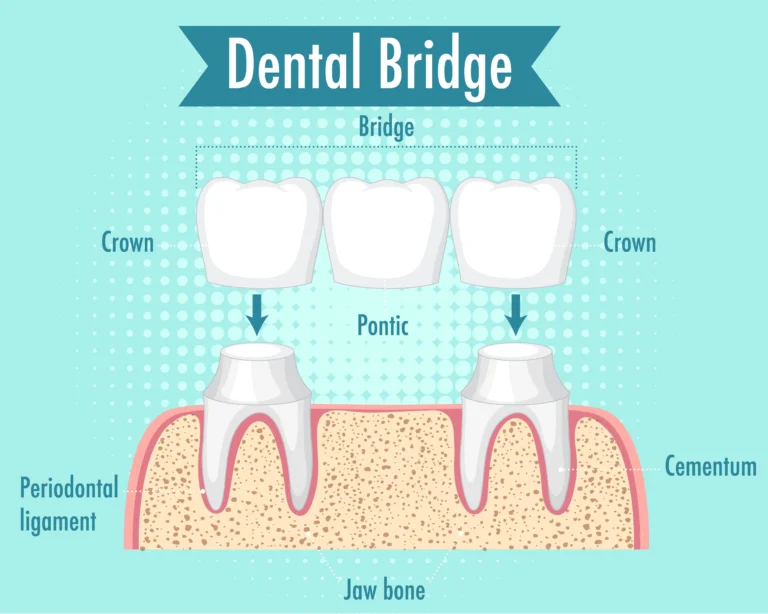
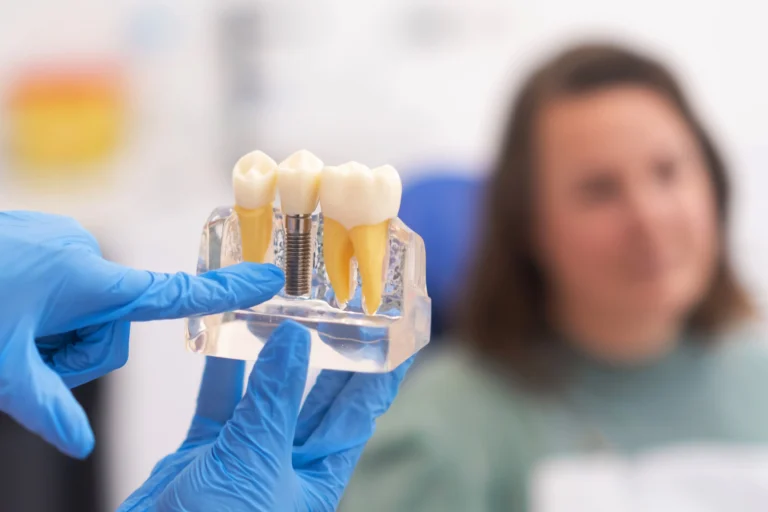
Both protocols replace a full row of missing or failing teeth with one fixed full-arch prosthesis, screwed onto titanium implants that fuse with the jawbone over several months — a process called osseointegration. Neither system is removable: patients brush and floss around them like natural teeth, not like a denture that comes out at night.
The distinguishing detail is implant count and placement. All-on-4 places two implants vertically at the front of the jaw and two angled up to 45° toward the back, using bone that’s already there without grafting in most cases. All-on-6 adds two more implants along the arch, which shortens the unsupported span of the bridge and spreads chewing force across more anchor points.
All-on-4 vs. All-on-6 at a Glance
| Feature | All-on-4 | All-on-6 |
|---|---|---|
| Implants per arch | 4 | 6 |
| Typical placement | 2 front (vertical) + 2 back (angled) | 6 spread more evenly across the arch |
| Bone typically required | Less; angled implants use existing bone | More, and in more locations |
| Grafting likelihood | Often avoided | Higher in some cases, especially upper back jaw |
| Force distribution | Across 4 points | Across 6 points, generally more even |
| Fixed teeth same day | Frequently possible | Frequently possible |
| Best suited for | Moderate bone loss, simpler surgical plan | Heavier bite forces, uneven or limited bone in specific spots |
How Bone Density Decides Which Protocol Fits Your Case
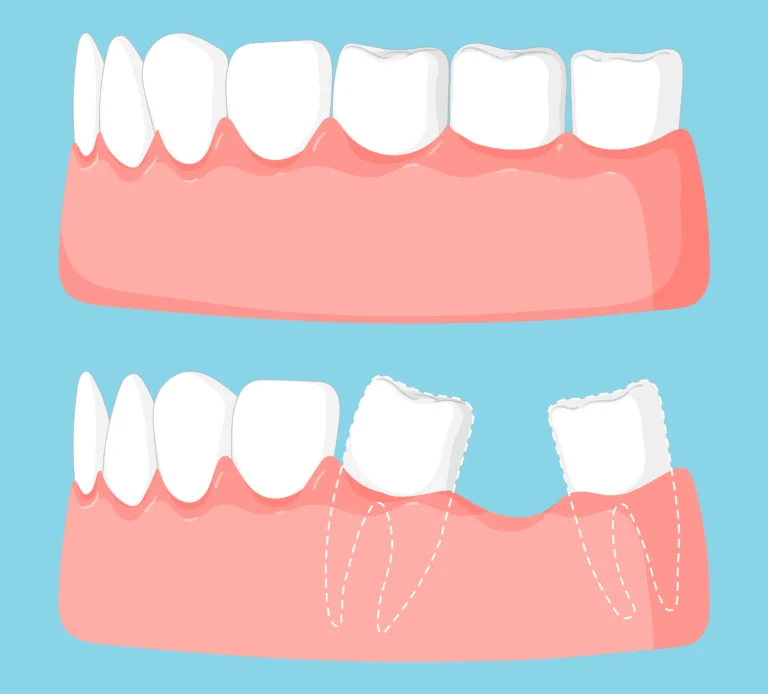
Neither system is chosen because it “sounds” stronger. The decision starts with a cone-beam CT scan that shows exactly how much bone remains at the front and back of your jaw, where the sinuses sit in the upper arch, and where the nerve runs in the lower one. Patients who’ve already experienced significant bone resorption often qualify more easily for All-on-4, precisely because its angled back implants are designed to reach the bone that’s left rather than requiring a wider footprint.
- Bite force. Heavy chewers or patients who clench or grind at night may benefit from the extra support points All-on-6 provides.
- Arch length. A longer or wider arch can leave a long unsupported gap between four implants; six implants shorten that span.
- Sinus position. A low sinus floor in the upper jaw limits how far back implants can go, which sometimes favors the angled All-on-4 layout over adding more sites.
- Overall healing capacity. Conditions that affect healing, such as uncontrolled diabetes or smoking, factor into how many implant sites make sense.
A 2023 biomechanical study published in the Journal of Indian Society of Periodontology modeled stress distribution under All-on-4 and All-on-6 designs and found the six-implant configuration produced somewhat lower peak stress on bone and implants across several loading directions (Pandey et al., 2023). That’s a useful data point, not a verdict: a well-planned All-on-4 in solid bone routinely performs just as well in practice.
Planning Treatment When You’re Traveling from the US or Canada
For patients who don’t live near Chihuahua, the practical question isn’t only “four or six” — it’s how the logistics of a cross-border treatment actually fit together. Most full-arch cases follow a two-visit pattern: an initial trip for the CT scan, surgical planning, and implant placement, followed by a second visit three to six months later, once osseointegration is complete, to fit the final fixed prosthesis. Sending prior X-rays or a recent CT scan ahead of the first visit lets our implant team review your case and outline a provisional plan before you travel, so the appointment itself focuses on confirming and executing it rather than starting from zero.
Because many of our full-arch patients come from El Paso, Las Cruces, and other border communities, the trip itself is usually a short drive rather than a flight — which matters if a follow-up visit is needed. Patients coming from farther afield can take advantage of the clinic’s arrangement with a nearby hotel for lodging during the healing period between visits.
Cost: Why Patients Look to Mexico for Full-Arch Implants
In the United States, full-arch treatment with either protocol commonly reaches well into the tens of thousands of dollars per arch once surgery, imaging, and the final prosthesis are included. That price gap — more than the specific dollar figures on any one clinic’s website — is the reason border regions in Mexico have become an established option for patients who need All-on-4 or All-on-6 but are pricing out the same protocols closer to home.
All-on-6 will typically cost somewhat more than All-on-4 wherever you have it done, since it involves two additional implants, a longer surgical appointment, and sometimes bone grafting to support the extra sites. The exact difference depends on your specific case, so it’s worth requesting a written, itemized quote after your CT scan rather than comparing a general price range across clinics.
Recovery: What to Expect After Surgery
Both protocols follow a similar path. Most patients leave surgery the same day with a temporary fixed set of teeth, spend the first one to two weeks on a soft-food diet while swelling subsides, and return three to six months later once the implants have fully integrated with the jawbone for the final prosthesis. All-on-6 involves two additional surgical sites, so it’s common to notice slightly more swelling in the first few days, though the overall timeline for both systems runs on largely the same schedule.
Whether you end up with four implants or six, day-to-day care afterward is the same: brushing, flossing with a water flosser around the prosthesis, and regular check-ups. Consistent hygiene has more influence on how long the result lasts than the number of implants underneath it, a point confirmed by Are Dental Implants Worth the Investment? What Patients Should Know.
Frequently Asked Questions
Is All-on-6 better than All-on-4?
Not automatically. All-on-6 spreads bite force across more anchor points and adds a margin of redundancy, while All-on-4 is often less invasive and avoids grafting more easily. The better system is the one that matches your bone density, bite, and goals — determined by a CT scan, not a general comparison.
Can I get All-on-4 or All-on-6 if I already have bone loss?
Often, yes. All-on-4’s angled back implants are specifically designed to use the bone that remains after tooth loss, and in some cases a bone graft or sinus lift can open the door to either protocol. A CT scan is the only reliable way to know which options apply to your jaw.
How long do All-on-4 and All-on-6 implants last?
With proper care and regular check-ups, both systems are designed to last many years, often decades. Long-term success depends far more on surgical planning, bite design, and daily hygiene than on whether four or six implants were placed.
Are All-on-4 and All-on-6 removable like dentures?
No. Both are fixed to the implants and stay in place permanently. You don’t take them out at night, and they don’t rely on adhesive the way a traditional denture does.
How many trips to Mexico do I need for All-on-4 or All-on-6 treatment?
Most patients travel twice: once for the CT scan, planning, and implant placement, and again three to six months later for the final fixed teeth once healing is complete. Sending prior records ahead of your first visit can help confirm your treatment plan before you travel.
Ready for the Next Step?
Four implants or six, the plan that actually works for your mouth starts with a scan, not a guess. Book a consultation with our implant team to find out which protocol fits your bone, your bite, and your travel schedule.