Dental Implants and Aging: What Changes After 40

Your 40s are when the conversation about dental implants usually starts getting real. You may have lost a tooth, started noticing gum sensitivity, or heard a dentist mention bone loss for the first time. The honest answer to what changes after 40 is: a lot—but none of it is a dead end. The variables that determine whether someone is a good implant candidate are biological, not chronological, and most of them are still in your control at this stage.
What actually shifts in your mouth after 40
The 40s are not a cliff. They are more like a slope that started at 30 and becomes steeper if you ignore it. Three things tend to accelerate during this decade:
- Periodontal disease progresses more aggressively. Gum infections that might have caused minor bleeding in your 30s can begin destroying the bone that anchors your teeth. Studies consistently identify periodontitis as the leading cause of tooth loss in adults over 40—well ahead of cavities.
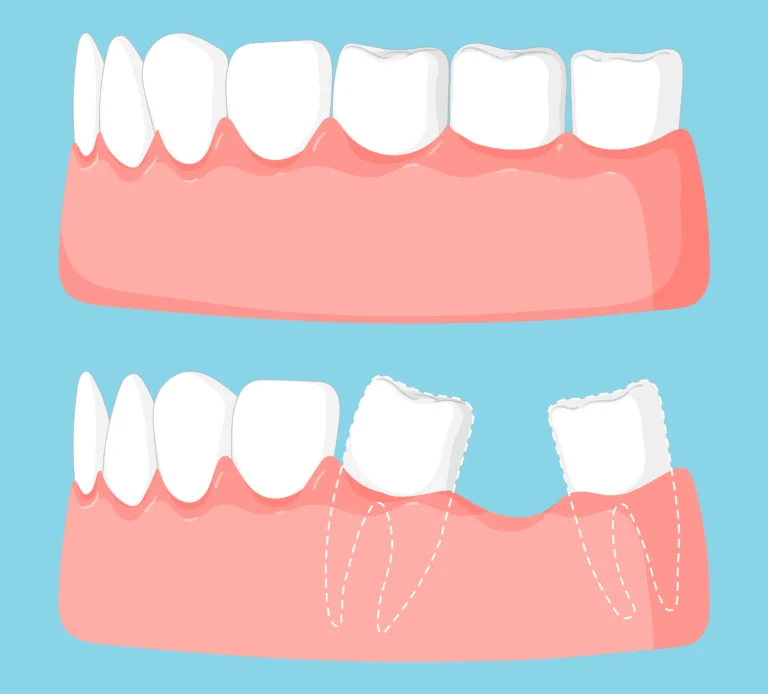
- Bone density responds to tooth loss faster. Once a tooth is gone, the jawbone in that area starts resorbing within months because it no longer receives the mechanical stimulation from a root. The longer a gap stays empty, the less bone remains to anchor an implant.
- Systemic conditions become more common. Diabetes, hypertension, and medications that affect healing or bone metabolism are far more prevalent in your 40s and 50s than in your 30s. These don’t disqualify you from implants, but they affect the planning.
None of this is surprising, but the clinical implication is clear: the window for straightforward implant treatment is wider at 45 than it will be at 65.
The 40s advantage: why earlier is genuinely better
Most content on implants and aging focuses on seniors and whether they’re ‘too old.’ That framing misses the real point. If you are in your 40s or early 50s, you are likely still in a phase where:
- Bone volume is sufficient for standard implant placement—no grafting required.
- Any existing periodontal disease can be treated and stabilized before surgery, reducing complication risk.
- Systemic conditions, if present, are more likely to be well-managed or recent enough not to compromise healing significantly.
- The final implant will serve you for 20, 30, or 40+ years rather than 10–15.
Implants placed earlier in the bone’s life cycle integrate more predictably and face fewer complicating factors. A 45-year-old with controlled health and reasonable bone volume is, from a surgical standpoint, an easier case than a healthy 70-year-old with significant bone resorption from decades of missing teeth.
Bone loss: the factor that changes everything
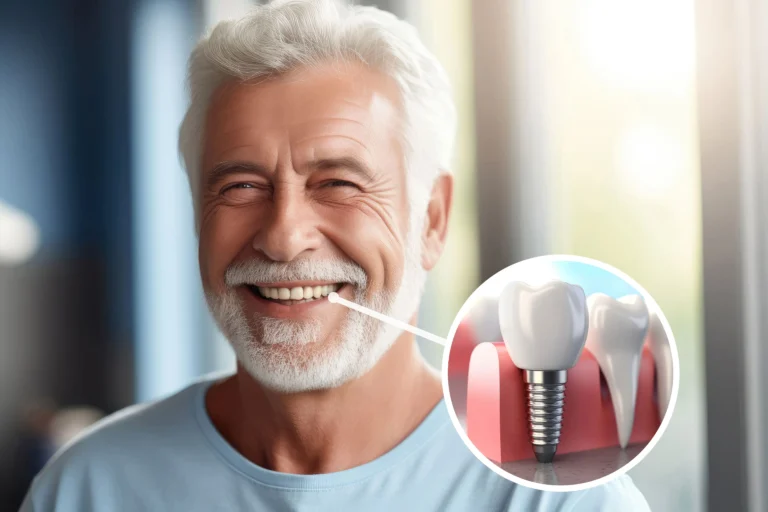
Dental implants require a sufficient volume of jawbone to fuse with through osseointegration—the biological process by which the titanium post bonds to bone tissue. When bone mass falls below a certain threshold, the implant has nothing to anchor into.
After 40, two things accelerate bone loss in the jaw:
- Missing teeth. Without the pressure a root transmits to the bone during chewing, the body treats that section of jaw as unnecessary and reabsorbs it. This process starts within the first 6–12 months after a tooth is extracted and continues steadily.
- Untreated periodontal disease. Bacterial infection destroys the bone directly. Advanced periodontitis can eliminate 30–50% of the bone supporting a tooth before the patient notices significant pain.
When bone loss is already significant, bone grafting is typically required before implant placement—a procedure that rebuilds volume using natural or synthetic bone material. Grafting adds 3–6 months to the treatment timeline and increases cost and complexity. It is effective, but avoidable in many cases if you act before severe loss occurs.
For patients who have lost multiple teeth across a full arch, All-on-4 or All-on-6 solutions are designed to work with reduced bone volume by positioning implants in areas of the jaw where density is naturally preserved. This makes them a realistic option even when bone loss is already moderate.
Why gum health is the gating factor for implants
You cannot place an implant in an infected environment. Active periodontal disease is one of the few absolute contraindications for implant surgery—not because the procedure is too dangerous, but because the infection will attack the implant the same way it attacked the natural tooth, leading to a condition called peri-implantitis, which causes bone loss around the implant post and eventual failure.
The practical implication: if you are in your 40s and have been told you have gum disease, the first step toward implants is treating the periodontitis, not scheduling the implant procedure. Once the infection is eliminated and the gum tissue is stable, implant candidacy is reassessed. In many cases, a few months of periodontal treatment is what separates someone who cannot get implants today from someone who can in six months.
This is also why regular periodontal maintenance after implant placement matters. Implants do not get cavities, but the tissue surrounding them is still vulnerable to bacterial infection. The care routine does not disappear once the implant is in.
Health conditions: what actually matters and what doesn’t
Patients over 40 often worry that a diagnosis—diabetes, osteoporosis, heart medication—automatically rules them out. In the majority of cases, it does not. What matters is whether the condition is controlled, not whether it exists.
| Condition | Effect on implant treatment | What changes in planning |
| Controlled diabetes | Slows healing, raises infection risk slightly | More frequent monitoring, possible protocol adjustments |
| Osteoporosis | Affects bone density; some medications interfere with bone remodeling | Requires imaging to assess jaw bone specifically; medication review |
| Hypertension / cardiac medication | Blood thinners affect surgical bleeding; some drugs affect gum tissue | Possible temporary medication adjustment (coordinated with physician) |
| Smoking | Reduces blood supply to gum tissue, significantly impairs healing and osseointegration | Cessation strongly recommended before and after surgery |
| Active periodontal disease | Absolute contraindication while active | Must be treated and stabilized first—then implant candidacy is re-evaluated |
When full-arch solutions become the right conversation
For patients who reach their 40s or 50s with multiple failing or missing teeth, the question often shifts from single implants to full-arch reconstruction. All-on-4 and All-on-6 protocols place a complete arch of prosthetic teeth on four or six implants, strategically angled to take advantage of denser bone regions—often eliminating the need for bone grafting even when some resorption has already occurred.
These solutions are not only for patients in their 70s who have been wearing dentures for decades. A 48-year-old with advanced periodontitis and extensive bone loss around multiple teeth may be a better candidate for a full-arch implant solution than for trying to save individual teeth with uncertain prognoses. The conversation is worth having early, not after another five years of incremental tooth loss.
Frequently Asked Questions
Is 40 too young for dental implants?
No. There is a minimum age for implants—jaw growth must be complete, which typically happens by the late teens or early 20s—but there is no maximum. At 40, candidacy is based entirely on bone volume, gum health, and overall medical status, not on being ‘too old’ or ‘too young.’
Can I get implants if I already have some bone loss?
In most cases, yes. Moderate bone loss can be addressed with bone grafting before implant placement. Significant loss across a full arch may point toward an All-on-4 or All-on-6 solution, which is designed to work with areas of preserved bone density. A 3D scan (CBCT) is the accurate way to assess what is actually there—a visual exam alone is not enough.
Can gum disease prevent me from getting dental implants?
Active, untreated gum disease does, yes. An infected environment will attack an implant the same way it attacked the natural tooth. But gum disease that has been treated and stabilized does not disqualify you. The sequence matters: periodontal treatment first, implant evaluation after.
How long does osseointegration take in patients over 40?
The standard healing window for osseointegration is between two and six months. Age alone does not lengthen this significantly in healthy patients. Factors that do slow it: smoking, poorly controlled diabetes, certain medications, and insufficient bone density. Most patients in their 40s and 50s with no major health issues heal within the typical range.
Do dental implants fail more often as you get older?
Not significantly if health is well managed. Large-scale implant studies report long-term success rates above 95% in the general adult population; the variation by age is smaller than most patients expect. What drives failure is not age but the factors listed above: infection, inadequate bone, and poor systemic health control. An older patient with excellent periodontal health and controlled medical history often fares better than a younger patient who smokes.
The bottom line on timing
Your 40s are not the beginning of the end for dental implant candidacy—they are, for many people, the last phase where straightforward treatment is still the default. The bone is there. The gum tissue is still recoverable. The systemic complications are manageable.
What changes after 40 is the margin for delay. Every year a missing tooth stays unreplaced, the bone underneath resorbs further. Every year periodontal disease goes untreated, more of that bone is lost. The biology of the 40s is still working with you, but it will not wait indefinitely.
If you have been putting off an implant consultation—whether you are in Chihuahua or coming from Texas—this is the moment to book it. An evaluation costs nothing but time, and it tells you exactly where you stand before conditions that are manageable today become harder to reverse.