What Happens If You Delay Replacing a Missing Tooth
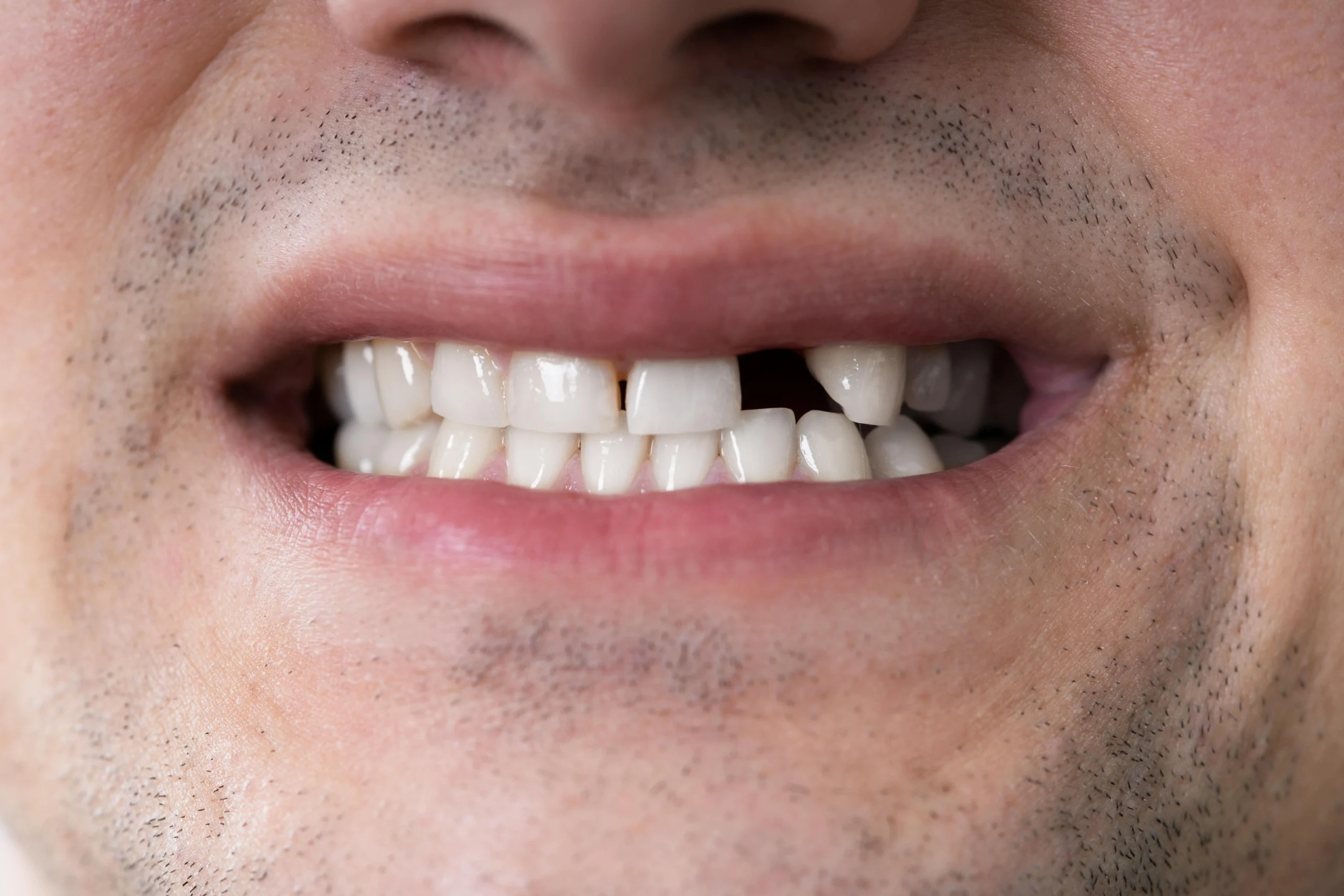
A missing tooth rarely hurts. That’s part of the problem. When there’s no pain, it’s easy to file the gap under “deal with it later” — especially when cost, time, or the uncertainty of treatment are already on your mind. But delay is rarely neutral here. The changes that follow tooth loss start within weeks, not years, and they compound each other in ways that make replacement progressively more complicated and more expensive.
This article walks through exactly what happens in your mouth when a tooth goes unreplaced — and why the timing of treatment changes what your options look like.
The gap looks harmless. It isn’t.
Most patients who wait to replace a missing tooth aren’t being careless. They’re making a reasonable-sounding calculation: the gap isn’t visible, it’s not causing pain, and treatment can wait. What that calculation misses is that tooth loss triggers a biological process in the jawbone that begins immediately and doesn’t pause while you wait.
Your other teeth are also involved. They don’t stay put while there’s an empty space next to them. And your gums are affected too. None of these changes send obvious warning signals early on — which is exactly why so many people are surprised when they finally book a consultation and find out what months or years of delay have added to the picture.
What starts happening in the jawbone right away
Your jawbone stays dense because tooth roots stimulate it every time you chew. That stimulation signals to the bone that it’s being used and needs to stay strong. Remove the tooth, and that signal stops. The body responds by beginning to resorb the bone in that area — breaking it down and redirecting resources elsewhere.
This process, called alveolar bone resorption, is documented to begin within weeks of extraction. Published research in the Journal of Prosthodontic Research found that roughly half of alveolar bone width can be lost within the first twelve months after a tooth is removed, with a significant portion of that happening in the first three months.
Over time, bone loss changes the shape of your jaw and face. The cheek on that side may begin to look slightly sunken. The jawline can lose definition. These structural changes become more visible the longer the gap remains unfilled, and they create a practical problem: dental implants require sufficient bone density to anchor securely. Wait long enough, and an implant may not be possible without first doing a bone graft — a separate procedure that adds time, cost, and surgical complexity.
How your neighboring teeth respond to the empty space
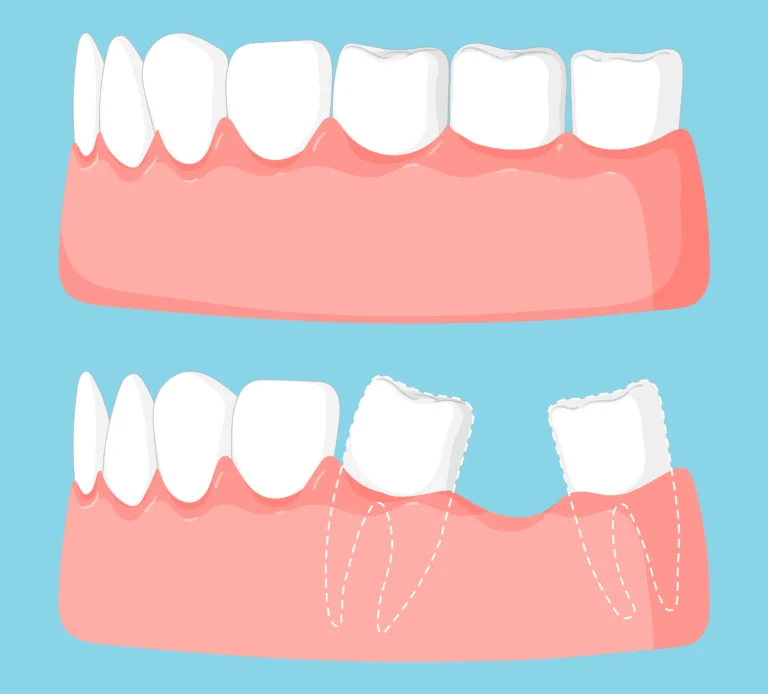
Teeth maintain their position partly by leaning against each other. Take one away and the neighbors lose that lateral support. Over months, they begin to tilt or drift toward the gap. The tooth directly above or below the missing one — its former “bite partner” — may shift vertically, moving up or down into the empty space.
What this creates is a slow, uneven redistribution of force in your bite. Some teeth start taking pressure they weren’t designed for. Others lose contact with opposing teeth. And because these shifts happen incrementally, most people don’t notice until a dentist points to an X-ray showing teeth that are nowhere near where they started.
The practical consequence: if you eventually want an implant in that space, there may no longer be enough room for it. Teeth that have drifted into the gap sometimes need to be moved back with orthodontic treatment before restoration can happen — turning what would have been a straightforward replacement into a multi-step process.
The bite problems that follow — and why they’re harder to fix than they look
When teeth shift, your bite changes. What was once a well-balanced distribution of force across your jaw becomes uneven. You may start unconsciously favoring one side when you chew. That’s not a small accommodation — chewing asymmetrically for months or years puts chronic stress on specific teeth and on your jaw joint (the TMJ).
The results can include:
- Accelerated wear on the teeth that are now absorbing extra load.
- TMJ dysfunction: jaw clicking, soreness, or limited range of motion — conditions that are genuinely difficult to reverse once they’re established.
- Cracking or fracturing in teeth that were never designed to bear that pressure alone.
- Difficulty chewing certain foods, which some patients normalize without realizing the underlying cause.
These aren’t theoretical risks. They’re patterns that clinicians who treat a lot of tooth loss see consistently, especially in patients who delayed replacement by two years or more.
Why bone loss and gum disease feed each other
This is where the cascade effect becomes clinically significant — and it’s the connection that’s most often left out of simple lists of “consequences of missing teeth.”
As the jawbone under a gap recedes, it changes the geometry of the surrounding tissue. Gums that no longer have bone underneath them to fill the space can pull away or become loose. That looseness creates pockets where bacteria accumulate — the exact environment that drives periodontal disease.
So a gap that started as a structural problem becomes a gum health problem. And periodontal disease, if untreated, causes further bone loss — which makes future implant placement even more difficult. The two processes reinforce each other.
Treating bone loss and gum disease before placing an implant isn’t optional. Any practice that places implants without addressing periodontal status first is skipping a step that compromises long-term success. At Los Ángeles Dental Center, our periodontists and implantologists work together precisely because these two problems so often arrive together. The sequence of care matters.
How long you’ve waited changes what treatment looks like
Replacement options don’t change based on how long you’ve waited — implants, bridges, and removable partial dentures are always on the table. What changes is how much preparatory work is needed before those options become viable.
Here’s a rough picture of how timeline affects complexity:
- Within a few months of extraction: Bone and gum tissue are still mostly intact. Implant placement is often straightforward, with the best conditions for integration.
- Six months to one year: Some bone resorption has occurred. The implant is still usually possible, but the evaluation is more detailed and grafting may be indicated depending on what the imaging shows.
- One to three years: More significant bone loss is likely. Neighboring teeth have often shifted. Bone grafting before implant placement is common. Treatment planning gets longer.
- Three or more years: Substantial bone resorption, possible gum disease involvement, drifted neighbors, and bite compensation all need to be addressed. What was once a single procedure becomes a staged treatment plan.
The important thing: waiting longer doesn’t mean implants become impossible. It means they require more preparation. Patients who come in after years of delay still get to a functioning, fixed restoration — it just takes more time to get there.
Replacement options — and why timing matters for each
Three main paths exist for replacing a missing tooth or multiple missing teeth:
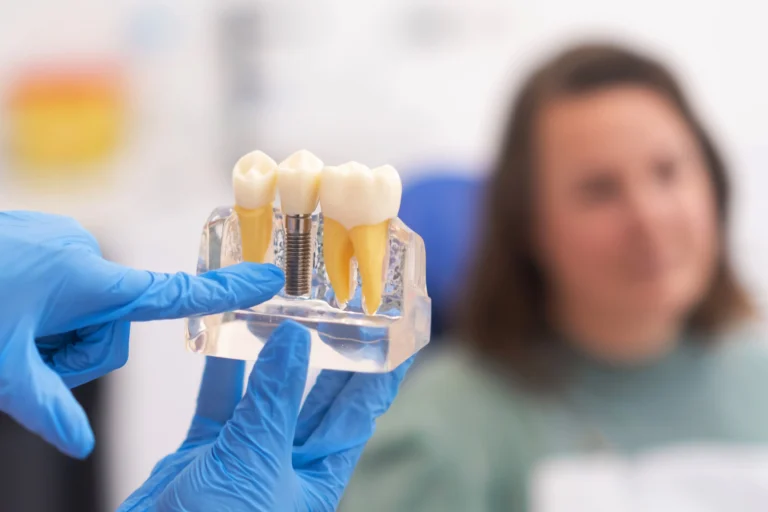
- Dental implants: A titanium post placed into the jawbone acts as an artificial root, with a crown on top. Implants are the only option that replaces the root — which means they’re the only option that prevents bone resorption. They function like a natural tooth and, with proper care, are designed to be permanent.
- Dental bridge: An artificial tooth held in place by crowns on the adjacent teeth. Bridges don’t require surgery and are faster than implants, but they involve removing healthy enamel from neighboring teeth to anchor the bridge — and they don’t stimulate the bone underneath, so gradual bone loss continues under the bridge gap.
- Removable partial denture: A detachable appliance that replaces one or more teeth. The least invasive option to begin with, but also the least functional and the least bone-protective. Many patients who start with a partial denture eventually move to implants when they’re ready for something more permanent.
Timing affects implants most directly. The longer the wait, the more likely bone grafting becomes part of the process. For patients missing several teeth or who’ve been using a denture for years, All-on-4 or All-on-6 implants provide a full-arch fixed restoration anchored by implants — a solution that works even when significant bone loss has already occurred.
Frequently asked questions
How long can you wait to replace a missing tooth?
There’s no universal deadline, but the evidence is clear that the sooner replacement happens, the simpler the treatment. Bone resorption begins within weeks of extraction and continues over time. Waiting a year or more increases the likelihood of needing bone grafting before an implant can be placed. If you’ve already waited, that doesn’t close the door — it just means a more thorough evaluation is needed before deciding on a treatment plan.
Does a missing back tooth still need replacing?
Yes. Back teeth are invisible when you smile, which is why many patients put off replacing them — but they do most of the heavy lifting when you chew. A missing molar or premolar shifts bite load to the remaining teeth, drives the same bone resorption as any other missing tooth, and often causes the neighboring teeth to drift more noticeably because of the force involved. The argument that “no one can see it” doesn’t change the biology.
Can bone loss from a missing tooth be reversed?
The bone that’s already been lost can’t regenerate on its own. A bone graft can rebuild volume in that area, using bone material to encourage your body to form new bone tissue over several months. This is why bone grafting is often a required step before implant placement in patients who’ve waited years — the procedure restores enough density for the implant to anchor securely. The graft itself adds time to the overall treatment, typically several months before the implant can be placed.
Is it too late to get an implant if I’ve already waited years?
Almost never. Years of waiting rarely make implants impossible — they make them more involved. Most patients who delayed replacement can still receive implants, though they may first need bone grafting, periodontal treatment, or orthodontic correction of drifted teeth, depending on what the evaluation finds. The starting point for those patients is a detailed exam with imaging, not an assumption that it’s too late.
A note from our specialists in Chihuahua
Most patients who come in after a long delay start the conversation with some version of “I should have come sooner.” Maybe. But the more useful framing is: the right time to act is now, not when the gap was fresh.
At Los Ángeles Dental Center, our implant and periodontics team evaluates each case on its actual current state — bone volume, gum health, neighboring teeth, bite, full clinical picture. From there we build a realistic treatment plan with clear sequencing. Whether you lost a tooth recently or years ago, the first step is the same: a proper evaluation so you know exactly what you’re working with.
Contact us at los angeles dental center or reach us on WhatsApp to schedule your consultation. We see patients from Chihuahua and from across Texas — and we’ll give you a straight answer about what your specific case looks like.